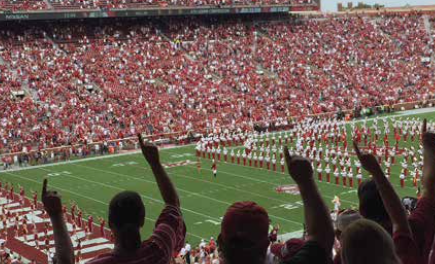
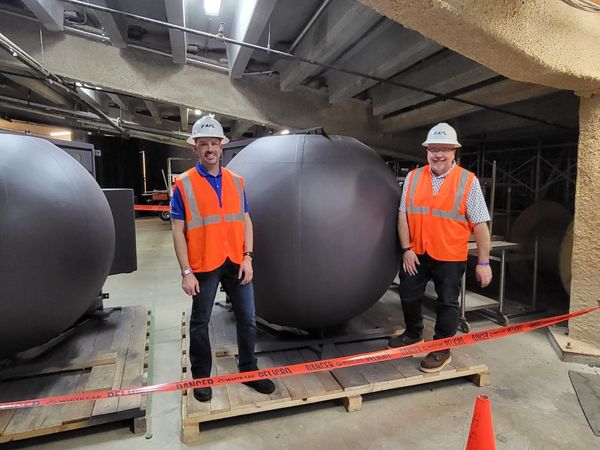
Alabama stadium operations getting a boost from Wait Time crowd movement data

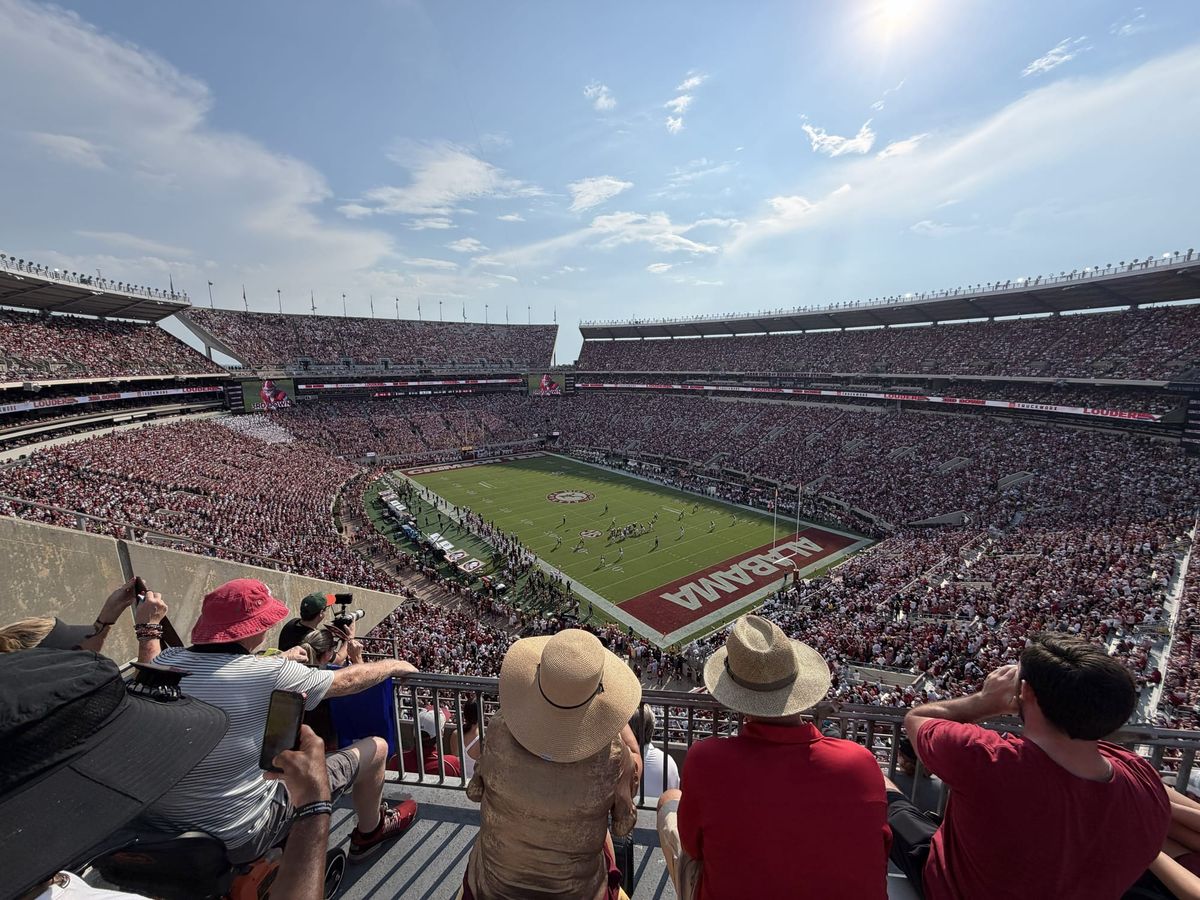
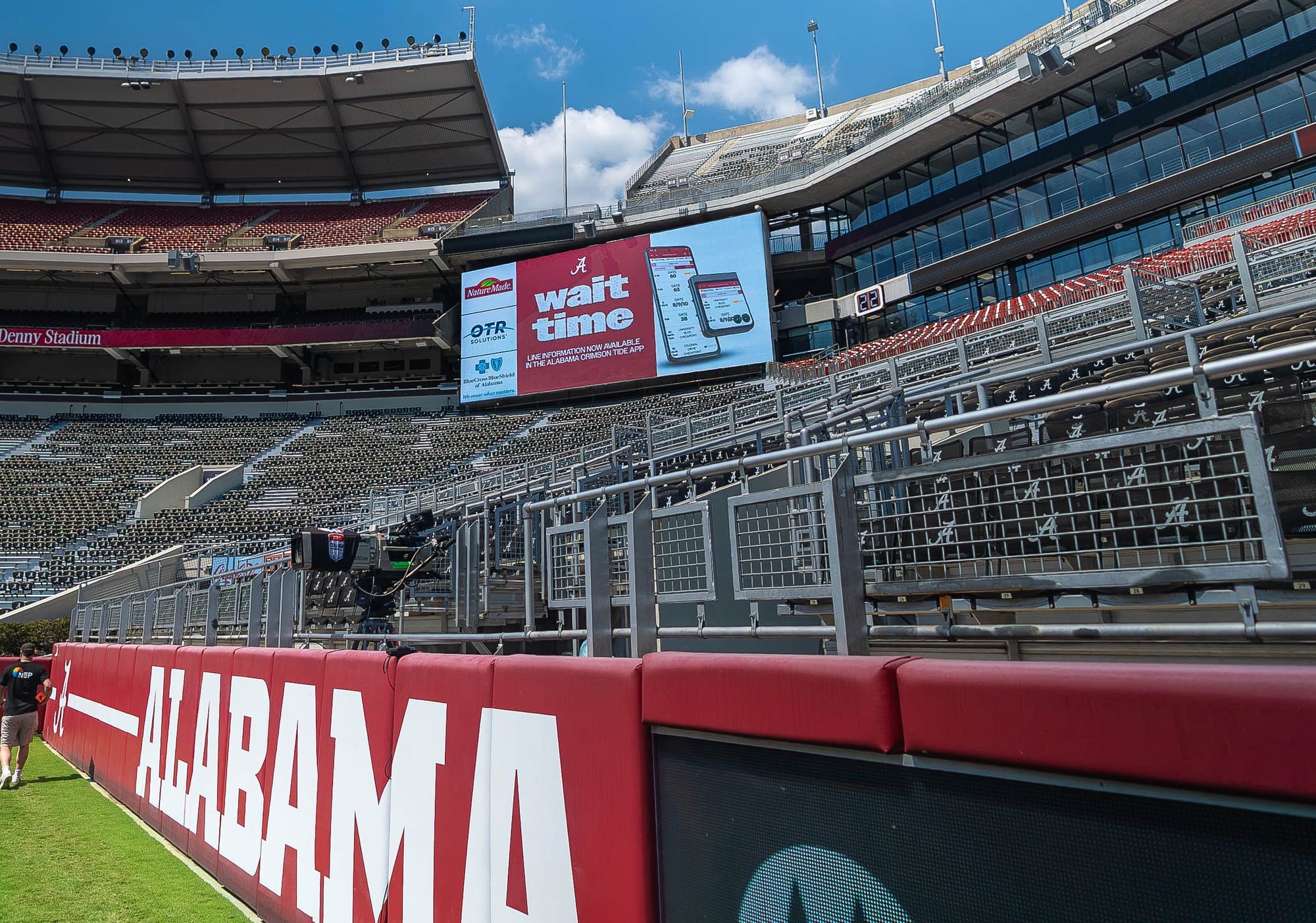
Fans at University of Alabama football games now have some computerized help in finding the shortest lines for entry, concessions, and restrooms, thanks to the deployment of technology from "crowd intelligence" provider Wait Time.
And while game-day visitors to the 100,077-capacity Bryant-Denny Stadium in Tuscaloosa, Ala., may find such help beneficial, other uses for the cumulative and real-time data produced by the system of Wait Time cameras and back-end processing is proving even more important to crowd-sensitive stadium operations, like entry setups, concession-stand configurations and maintenance tasks.
Beyond the red light/yellow light/green light status information Wait Time can provide for lines at entry gates, concession stands and restrooms, the real-time crunching of crowd numbers can inform internal situations like restroom resupply, concession inventory and security and ticketing backups which can be addressed immediately, without waiting for a call for help.
And the cumulative information collected by the Wait Time system may even be more helpful to stadium operators, since it provides granular data on how fans physically interact with stadium real estate, allowing venue operators to compare what happens at different times at different events so they can fine-tune future stadium setup efforts to produce better foot traffic, higher revenues and to eliminate as many long lines as possible.
According to Rand Harris, associate athletics director and chief technology officer for the University of Alabama, waiting in lines -- all kinds of lines -- was traditionally the biggest beef for fans visiting Bryant-Denny Stadium. Lines getting into the venue, lines at concession stands and lines at restrooms were perennial top contenders on the "what's wrong with your visit" post-game surveys.
After studying the Wait Time offering (Harris said the school saw the technology in use when Alabama visited Levi's Stadium in Santa Clara, Calif., during the 2019 College Football Playoff championship game) Alabama went ahead with a Wait Time deployment ahead of the 2025 football season. While Alabama put up the red/yellow/green alerts on digital displays and in the stadium app, Harris said other information provided by the system led to almost immediate changes stadium-wide.
"Within the first year we adjusted our operations pretty heavily based off of the actual data analytics we started pulling from the system," Harris said. Such changes, Harris said, included some simple moves like moving metal detectors farther away from the stadium or starting queues at a different location. Other adjustments including changing how concession lines would shape and form, and changing traditional belly-up stands to stands offering only checkout-free technology.
"With all of those, we started really quickly realizing the benefit of the [Wait Time] system outside of the fan-facing things we were just trying to deploy initially," Harris said.
The long path of making Wait Time important to stadiums
Wait Time, which was created by CEO and founder Zack Klima in 2014, uses cameras mounted above crowd-gathering stadium areas to collect data. Since it only tracks pixels associated with moving bodies – and no personal or facial-recognition information – Wait Time is by design a neutral observer of crowds, making its deployment inherently non-controversial.
On the back end, Wait Time uses patented algorithms for structured and unstructured queues, high-volume entry/exit locations and a density percentage measurement to produce live "heat maps" of crowd locations, collecting such data throughout an entire event day.
Over the years, Klima and the Detroit-based company have kept the fan-facing red/yellow/green alert systems at the front of the Wait Time pitch, perhaps because it's easily understandable to anyone who's ever waited in a stadium line. The only problem with that approach is that when it comes to measuring ROI, the red/yellow/green systems are actually somewhat of a weak link since there's no way of accurately measuring how many fans are actually using the data to make in-game decisions.
While the red/yellow/green information may be the Wait Time brand name, the immediate and cumulative operational data is the real value proposition for venue operations. Over the years, a new Wait Time customer win story would generally deal with the fan-facing component up front. But the more boring but more important story about why venues kept using the system almost always pointed to the venue operational components.
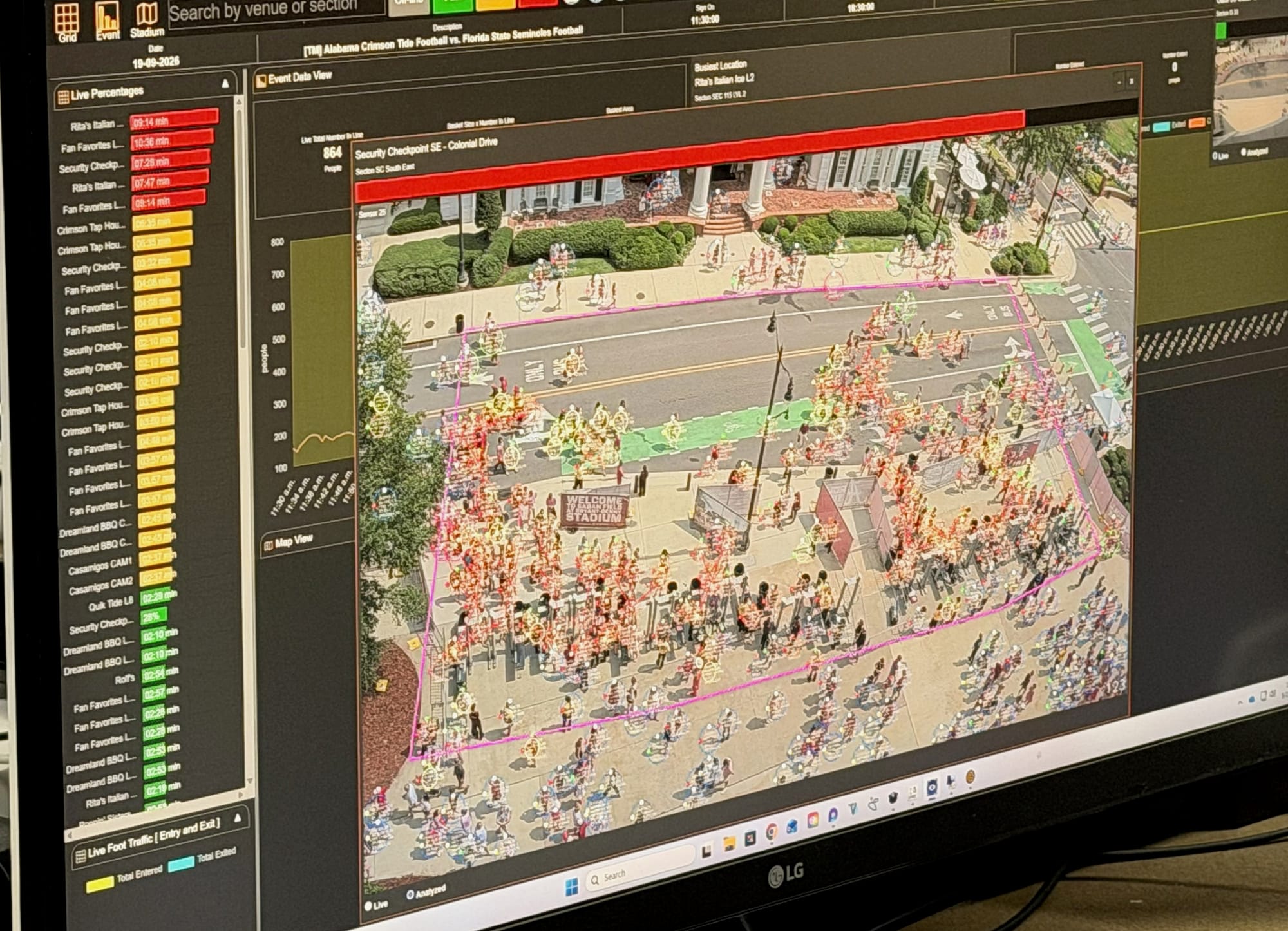
In a recent interview with Sports Business Journal, Harris said that while Alabama had all kinds of gate-based entry ticket-scanning data, it didn't know how long fans waited in line to enter – a process that has been changing as of late due to increased pregame activity outside the venue perimeter.
“We certainly knew the counts and what gates were important but not how they showed up, when they showed up, and what enticed them to show up at different times,” Harris told SBJ. Now with Wait Time systems in place, Alabama has a data-centered plan on how to better prepare its game-day setups, depending on the day, time and even opponent.
"Now we have whole new deployment plans [about] what this weekend's crowd is probably going to look like versus the Georgia game, which a whole different animal to deal with," Harris said in an interview with us ahead of the 2026 home opener. "And so we will staff it differently. We will adjust gates and push them out further."
Better networks make Wait Time deployment easier
After winning placements at pro venues including Levi's Stadium, Empower Field at Mile High in Denver and Dodger Stadium, Wait Time is now scoring big-college deals, with an installation at Ohio State in 2023 and now Alabama. In both college cases, the existence of a high-performing full-stadium network made the Wait Time deployment easier, since cameras could be easily attached to the existing network.
For Alabama, a recent network upgrade saw the stadium move to a completely converged network, one that now includes traditionally separate functions like Wi-Fi and broadcast. According to Harris, the $13 million Wi-Fi upgrade with equipment from HPE Aruba includes 1,700 new access points.
Other factors that make the Wait Time purchase attractive include its compute structure using Intel Xeon processors for on-site analytics crunching. According to other sites that have deployed Wait Time, the up-front cost of cameras, cabling and the yearly software-as-a-service fee is typically in the low six figures.
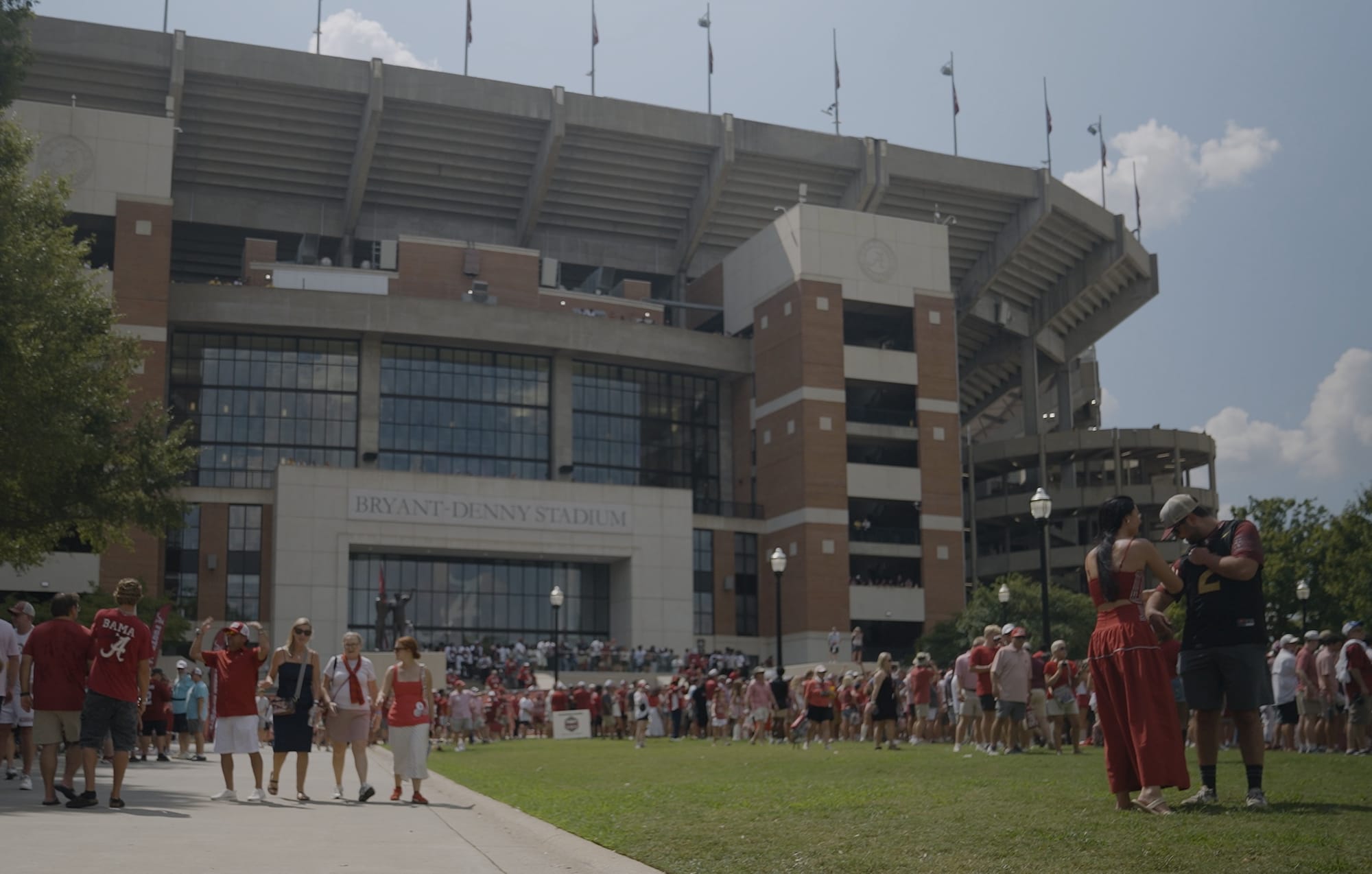
And if the ROI is hard to measure on the red/yellow/green information, being able to combine the accumulated foot-traffic Wait Time data with other venue information, like point of sale figures from individual stands or ticket scans at entry gates, provides a treasure trove of actionable information for venue operations.
Venues, Klima said, can "take the data and use it to be proactive to adjust revenue strategy. That's what we have been preaching. That's how you're going to get ROI."
One interesting low-tech switch that came out of the Wait Time deployment was a major change to how Alabama identified sections inside Bryant-Denny Stadium. According to Harris, Alabama's historic section identifications, which had grown with the stadium over time, used letters in a somewhat random pattern that did not immediately convey where a section might be.
For this year, the school re-numbered entry gates and seating sections in a numerical fashion (with numbers increasing in a horizontal direction, and beginning numbers with the vertical seating level), which assists the Wait Time information (if you are at section 302, you know that 303 is the next one over). The new numbering also benefits public safety personnel, who might previously have been confused over where an exact section might be.
On the concessions side, Alabama is looking for even more improvement this season with the introduction of Mashgin optical-scanning checkout terminals, which have been proven to speed up concessions checkouts compared to traditional belly-up counter formats. Based on Wait Time data from 2025, Alabama converted 13 stands with traditional checkout formats to using Mashgin terminals. Also based on Wait Time data, Alabama converted another 12 stands from traditional to grab-and-go formats.
How well will all the changes work? Whatever the outcome, with Wait Time in place, Alabama now has a way to measure accurately just where and when people are going, allowing it to fine tune its processes along the way.
And though there wasn't granular data to share on things like exactly how much faster lines are moving, Harris said there already is another data point that he's happy to relay.
"Ingress, or waiting in line at gates, went from one of our biggest complaints to now not even being in the top 10," Harris said. "Just within one season."